How to choose the best Online Food Delivery Software in 2026
Discover how to choose best online food delivery software for restaurants with key features and tips to boost delivery sales in 2026.
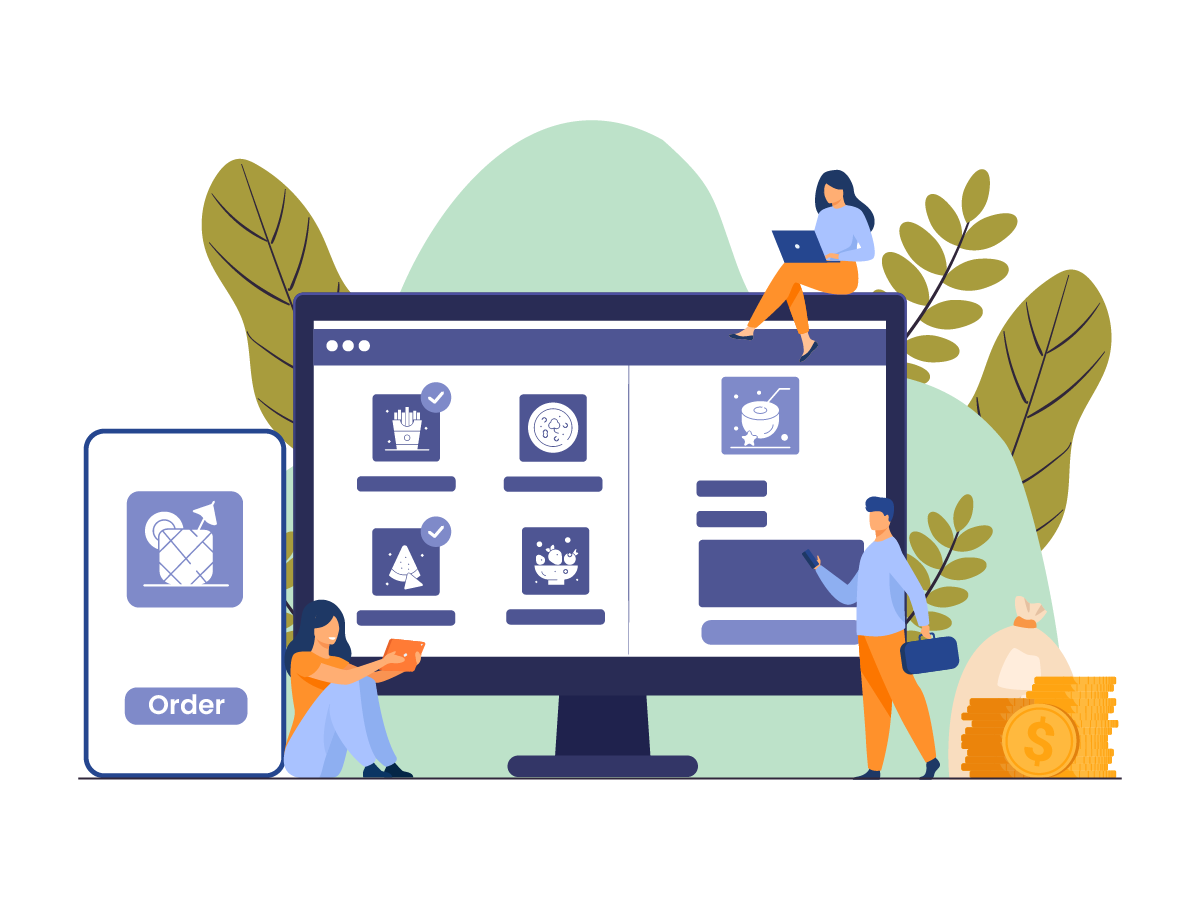


What is the one thing that almost all types of restaurants have in common? Do you have any ideas? Every type of restaurant will have an online food delivery service.
As you might know, it’s never easy running a restaurant. Additionally, you must contend with food trucks and ghost kitchens, both of which are gaining popularity every day, in addition to competing with other businesses.
A poorly performing delivery service can seriously harm your brand’s reputation. A negative ordering experience will also reduce the number of customers who visit your sit-down restaurant, which is why effective delivery management is essential.
However, make sure you avoid the below mistakes to remain ahead of your competitors. We will also go through the fixes to these issues and some pro tips so you can come up with plans to boost your sales as you try to choose the right online food delivery software
What Is Online Food Delivery Software?
Online food delivery software is the system a restaurant uses to accept, manage, and fulfill delivery orders, whether they come from your own website or app, a QR code menu, or third-party marketplaces. A complete platform typically connects your menu, kitchen, inventory, riders, and payments in one dashboard instead of forcing your team to juggle multiple screens and apps.
Most restaurants use one of three approaches to online food delivery: relying on third-party aggregators, running their own branded ordering channel, or combining both. Each comes with trade-offs, which we'll cover later in this guide.
List Of The Mistakes Restaurants Should Avoid For Online Food Delivery Software:
Online food delivery for restaurants presents several difficulties, including fierce rivalry, logistical problems, and cost estimation. Make sure you aren’t making any of the below-mentioned blunders in such a demanding workplace.
1. Making Customers Wait Too Long
In a dine-in setting, customers only wait for their food to be cooked. With delivery, they're also waiting for it to travel to their door, and that time varies a lot depending on distance, traffic, and kitchen load. Underestimate it, and you risk poor ratings and one-time customers who never order again.
How to fix it:
Base your estimated delivery time on both prep time and travel time, not just one or the other. Set a maximum delivery radius so every order stays within a distance that's realistic and cost-effective to fulfill. If an order will take longer than expected, notify the customer proactively instead of letting them find out when the food arrives late. Good online food delivery software calculates this automatically using live order volume, kitchen load, and delivery zone data, so your estimates stay accurate even during rush hours.
2. A Slow, Non-Mobile-Friendly Ordering Website
Every restaurant offering online ordering needs a website, but simply having one isn't enough. Most customers place food orders from their phones, so if your site is slow, cluttered, or hard to navigate on mobile, you're losing orders before they're even placed.
How to fix it:
Keep your menu, pricing, and offers up to date. Remove expired promotions immediately; nothing frustrates a customer more than an ad for a deal that no longer exists. Test your ordering flow on different devices, make sure the "order" button is impossible to miss, and offer multiple secure payment options at checkout.
3. Not Having a Branded Ordering App of Your Own
Many restaurants skip building their own app, either because they're unsure of the benefit or because they assume it's expensive. But customers consistently prefer ordering through a restaurant's own app or website when it's available, since it's usually faster and more familiar than switching between multiple food delivery apps. An app sitting on a customer's home screen also keeps your restaurant top of mind every time they unlock their phone.
How to fix it:
Set up an online ordering app that matches your website and lets customers reorder in just a couple of taps. Platforms like PosBytz let you launch branded Android and iOS ordering apps without building one from scratch.
4. Ignoring Customer Feedback and Reviews
Between sourcing ingredients, managing staff, and tracking revenue, responding to reviews often falls to the bottom of the list. But businesses that consistently respond to reviews, both positive and negative, tend to build more trust and show up better in local search results than those that stay silent.
How to fix it:
Respond to as many reviews as you reasonably can. Thank customers who leave positive feedback and invite them to order again. For negative reviews, acknowledge the issue, apologize where it's warranted, and explain what you're doing to prevent it from happening again. Managing this doesn't have to mean checking five different apps: PosBytz CRM lets you collect and respond to feedback across WhatsApp, SMS, and email from a single dashboard.
5. Weak or Careless Packaging
Your packaging is the only physical touchpoint a delivery customer has with your brand. Flimsy or poorly sealed packaging can let food arrive cold, soggy, or spilled, no matter how good the dish was when it left the kitchen. Some restaurants cut corners here to save on cost, but it often costs them repeat orders instead.
How to fix it:
Invest in packaging that actually protects the food in transit, keeps hot items hot and cold items cold, and holds up during travel. Where it makes sense for your brand, eco-friendly packaging can also be a point of differentiation for customers who care about sustainability.
6. Making Reordering Difficult
One of the biggest reasons customers order online in the first place is convenience. If they have to search your entire menu again every time they want the same dish they ordered last week, you're adding friction that pushes them toward whichever app makes it easiest.
How to fix it:
Let customers reorder their previous items in one tap. Showing their past orders, along with a simple "reorder" button and any rating they gave the dish, makes it easy for them to repeat a good experience instead of starting from scratch.
7. Not Marketing Your Delivery Service Effectively
When a customer places an online order, you get access to useful information, like their contact details and ordering habits, but many restaurants never use this data beyond checking daily or weekly sales totals. That's a missed opportunity to bring customers back.
- Use your own customer data: Send targeted offers based on past orders instead of generic promotions. If a customer tends to order on weekends, a midweek coupon can nudge them to order again.
- Build a presence on social media: A business page with appealing photos of your best-selling items, paired with a digital menu customers can order from directly, turns social browsing into orders.
- Don't skip offline marketing: Posters, local events, and flyers still work, especially for reminding nearby residents that they can order through your website or app. For a fuller playbook, see these restaurant marketing strategies.
8. Relying Only on Third-Party Delivery Apps
Third-party delivery apps are easy to set up, since they handle discovery and delivery logistics for you. But that convenience comes at a cost: they typically charge a commission on every order, and you often only get the customer's name, not the contact details you'd need to market to them directly.
How to fix it:
Build a delivery channel you own. It takes more upfront effort than joining an aggregator, but you keep a larger share of every order and can market directly to your customers going forward. PosBytz connects with regional delivery partners like Careem, Talabat through its delivery integrations, and also offers a free delivery app so you can manage your own riders without paying aggregator commissions on every order.
Online Food Delivery Software Features Checklist
When comparing platforms, look for these capabilities:
- POS and kitchen integration: Orders from your website, app, and aggregators should flow into your POS and kitchen without manual re-entry.
- Real-time order and rider tracking: Both your team and the customer should be able to see order status as it moves through preparation and delivery.
- Delivery zone and pricing controls: The ability to set delivery radius, distance-based pricing, and minimum order values by zone.
- A unified dashboard: One screen to manage orders from your website, app, call orders, and aggregators, instead of switching between tablets.
- Your own branded ordering channel: A commission-free website, app, or QR ordering option that puts you in control of the customer relationship.
- Menu and inventory sync: Updates to pricing or availability should reflect everywhere automatically, including on aggregator listings.
- Reporting and analytics: Visibility into which items, channels, and delivery zones are actually profitable.
- Readiness for newer ordering channels: As more customers place orders by voice or through AI-assisted ordering tools, it's worth checking whether a platform can support these channels as they grow.
Conclusion:
It takes a variety of tactics to properly run a restaurant to increase sales and build customer loyalty.
The aforementioned mistakes should also be prevented at all costs if the restaurant’s main objectives in building its online food delivery strategy are to grow its client base, strengthen brand loyalty, and generate the most money possible. If not, you’ll probably lose clients to your rivals and see a reduction in sales.
Take advantage of the expanding online food delivery market by fixing these issues and putting these suggestions into practice with the help of POSBytz.
Frequently Asked Questions
What is online food delivery software?
It's a system that lets restaurants accept, manage, and fulfill delivery orders from one place, whether the order comes from your own website or app, a QR code menu, or a third-party marketplace. Most platforms also connect to your POS, kitchen, and inventory so orders don't need to be entered manually.
How much commission do third-party delivery apps charge?
Commission rates vary by platform and region, but third-party aggregators commonly charge a percentage of each order's value. Because this cuts into your margin on every sale, many restaurants use aggregators for discovery while building a commission-free branded ordering channel for repeat customers.
Should my restaurant use its own delivery app or rely on aggregators?
It depends on your stage of growth. If you're new and need visibility, aggregators can help you reach customers quickly. As you build a regular customer base, adding your own branded ordering channel reduces commission costs and gives you direct access to customer data for marketing.
What features should I look for in online food delivery software?
Look for POS and kitchen integration, real-time order and rider tracking, delivery zone controls, a unified dashboard across channels, your own branded ordering option, and reporting that shows which items and channels are actually profitable.
How can I reduce delivery complaints and late orders?
Set delivery time estimates based on both prep time and real travel time, keep your delivery radius realistic, invest in packaging that holds up in transit, and notify customers proactively if an order is running behind schedule.
Related Resources
- Best Accounting Software for Restaurants: A Comparison study
- Automating Restaurant Operations: The Best ERP for Restaurants to Boost Efficiency and Growth
- Revolutionizing Restaurants with ERP Systems: Boost Efficiency and Success
- Simplifying Restaurant Bookkeeping: How to Choose the Right Software for Your Business
- Restaurant Tech Trends : Revolutionizing Restaurant Industry
About the author

The PosBytz Marketing Team
Editorial Team, PosBytz
The PosBytz Marketing Team shares practical insights on running smarter restaurants and retail stores from POS best practices to inventory management, online ordering, and customer loyalty strategies.