Restaurant Tech Trends 2026: Revolutionizing the Restaurant Industry
Restaurant Technology Trends in 2026: Innovations Shaping the F&B industry with automations from Restaurants, QSR's and Hotel segments.



Running a great kitchen isn't enough anymore. Restaurant owners now need the right technology stack to run efficient operations, serve customers faster, and grow revenue. This guide breaks down the restaurant tech trends shaping the industry in 2026, from AI-powered CRM and automated kitchens to QR ordering and sustainable operations, so you can decide which ones deserve a place in your restaurant.
What Are Restaurant Technology Trends?
Restaurant technology trends refer to the tools, software, and digital systems that restaurants use to run their front of house (FoH) and back of house (BoH) operations more efficiently. This includes point of sale (POS) systems, kitchen display systems, online ordering platforms, CRM tools, inventory software, and payment technology.
These technology trends in the restaurant industry apply to every type of food business, from a single café counter to a multi-outlet chain, a cloud kitchen, or a quick service restaurant (QSR). Staying current with these trends helps owners cut operational costs, reduce errors, and deliver a better guest experience, all of which directly affect the bottom line.
AI has accelerated this shift further. What used to be a matter of operational convenience is now becoming a competitive requirement. Restaurants that adopt the right restaurant technology trends are better positioned to manage rising costs, staff shortages, and changing customer expectations, whether they operate a fine dining establishment, a fast food outlet, or a cloud kitchen.
Customer-Facing Restaurant Technology Trends
Restaurant technology trends encompasses a wide array of innovative solutions and tools utilized within the F&B industry, spanning both on-premise and off-premise software applications, as well as various Front of House (FoH) and Back of House (BoH) equipment, alongside digital platforms. These technologies are all geared toward optimizing the efficiency and management of restaurant operations, making them indispensable for small café owners and luxury dining chain managers alike. Keeping abreast of the latest tech tools and trends is imperative for staying competitive in the dynamic restaurant landscape.
In an age where innovation propels progress, the technology trends in the restaurant industry find itself on the brink of a technological revolution. As we enter the era of AI, restaurant proprietors increasingly recognize the transformative potential of restaurant technology. It’s no longer just about operational efficiency; it’s a vital element for survival and expansion in a fiercely competitive market. The integration of restaurant technology transcends novelty; it’s now a cornerstone for delivering exceptional customer experiences, streamlining kitchen operations, and elevating overall business management. This evolution isn’t limited to upscale dining establishments but spans across the entire spectrum, encompassing quick-service restaurants (QSRs), fast-food outlets, and the broader food service industry.
In a landscape where tech trends are in constant flux, staying abreast of the latest trends isn’t merely advantageous; it’s essential for restaurant owners aiming to thrive. From smart kitchen equipment promising precision and efficiency to sophisticated data analytics offering profound insights into customer preferences, technological advancements are diverse and extensive. The adoption of innovative technology trends in the restaurant industry is no longer a choice; it’s a necessity, pushing the boundaries of traditional dining experiences and establishing new benchmarks in customer service and operational excellence.
In this article, we’ll explore the top 12 restaurant technology trends, illustrating how these innovations can revolutionize your restaurant business. Whether you’re an experienced restaurateur or new to the industry, understanding these trends will empower you with the knowledge to make informed decisions, ensuring your establishment remains at the forefront of the culinary world.
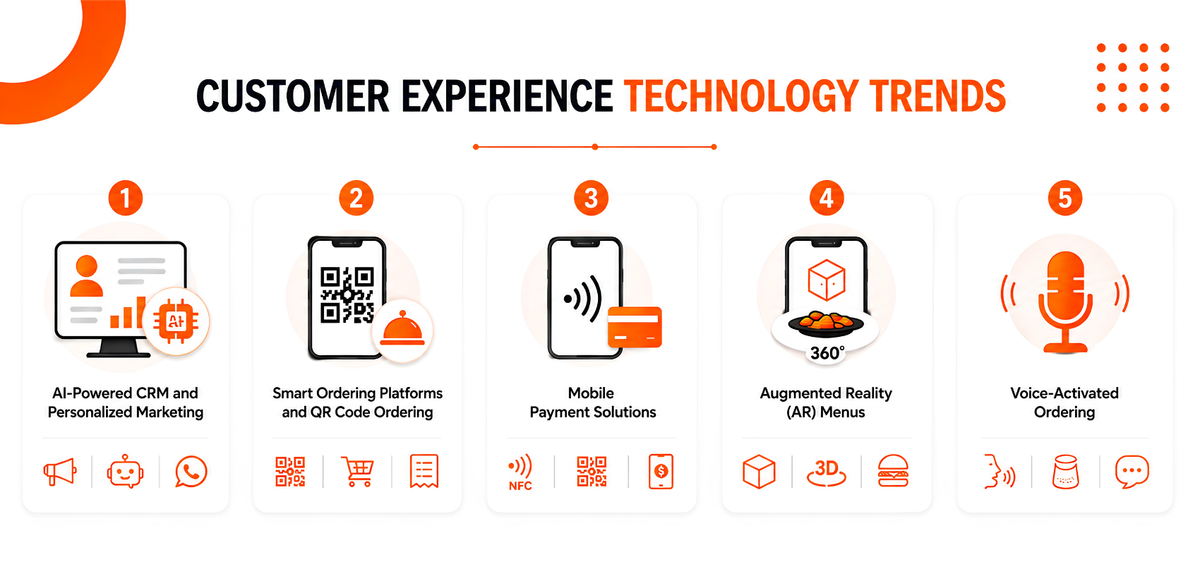
AI-Powered CRM and Personalized Marketing
AI is changing how restaurants manage customer relationships. Instead of generic promotions, restaurants can now build personalized campaigns based on a customer's past orders and feedback using an AI-driven CRM. This includes:
- Smart, personalized campaigns based on order history and feedback, learn more in this guide to choosing the right restaurant CRM
- AI-powered chatbots for handling reservations, customer queries, and orders
- Automated WhatsApp marketing campaigns that reach customers without manual effort
Smart Ordering Platforms and QR Code Ordering
Digital ordering has largely replaced the traditional paper menu. QR code ordering lets customers browse the menu, place orders, and pay directly from their phones, reducing wait times and cutting down on staffing needs at the counter. A QR code ordering system paired with a restaurant POS software keeps orders and kitchen order tickets (KOTs) in sync, which lowers dependence on waitstaff and improves table turnover and profit margins.
Mobile Payment Solutions
Mobile payments continue to grow in restaurants. With NFC (Near Field Communication) and QR code based payment options, customers can settle their bill with a tap or a scan, which speeds up checkout and reduces friction at busy times.
Augmented Reality (AR) Menus
AR is changing how customers browse menus. By scanning a QR code, a customer can view a 3D model of a dish before ordering, turning menu selection into an interactive part of the dining experience rather than just reading a list of items.
Voice-Activated Ordering
Voice technology is entering the restaurant space, letting customers place orders through AI assistants or smart devices. This is especially useful for delivery and takeout, where a quick voice command can replace several taps on a screen.
Kitchen and Operations Technology Trends
These trends focus on running the back of house more efficiently.
AI-Powered Operations and Automation
AI is also automating day-to-day restaurant operations, from inventory management to reordering stock. Key capabilities include:
- Smart inventory and recipe management with AI-driven demand forecasting
- AI-powered campaigns triggered by current inventory levels
- Conversational reporting, where owners can ask for reports and analytics in plain language, similar to an AI search result
Automated and Robotic Kitchen Systems
Robotics and automation are making their way into commercial kitchens, including automated cooking appliances and robotic prep stations. This trend reduces human error, speeds up service, and keeps output consistent, which is especially valuable in QSRs where speed is critical.
IoT for Kitchen Efficiency
The Internet of Things (IoT) is making kitchens smarter through connected sensors and devices. These can monitor equipment performance, track inventory levels in real time, and flag maintenance needs before a breakdown disrupts service.
Advanced POS Solutions
Point of Sale (POS) systems have evolved well beyond billing. Modern systems combine sales, inventory, and CRM into a single platform with real-time data and analytics, making POS one of the most consistent technology trends in the restaurant industry year after year.
Data, Sustainability, and Emerging Technology Trends
These trends round out a restaurant's technology stack with insight, training, and long-term sustainability.
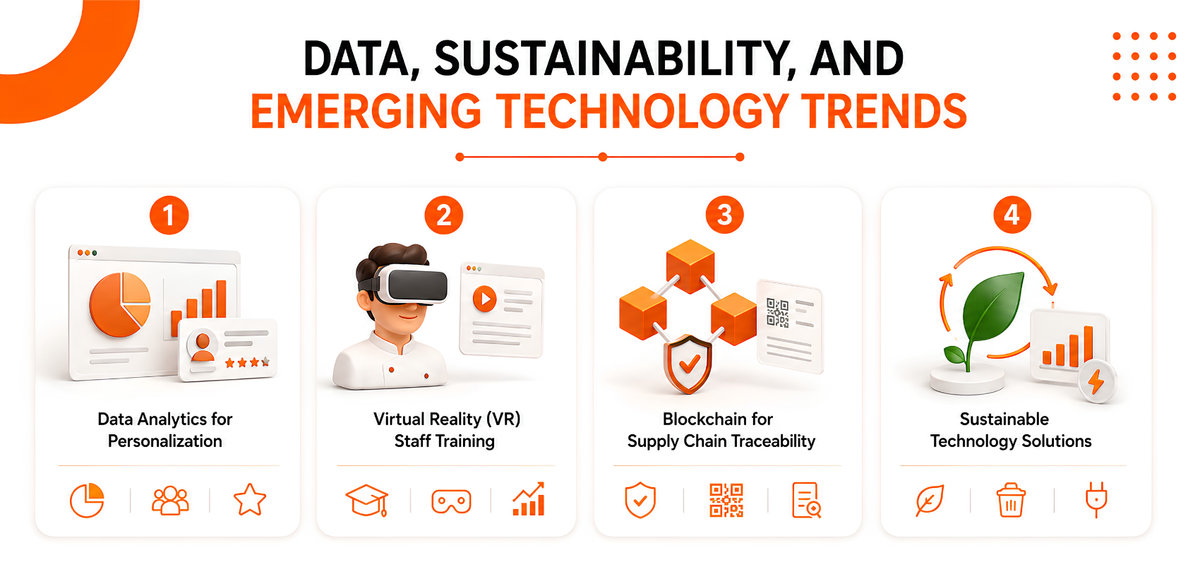
Data Analytics for Personalization
Data analytics gives restaurants a clearer picture of customer behavior. By analyzing order data, restaurants can adjust menus, recommend dishes, and fine-tune the overall experience to match what customers actually want.
Virtual Reality (VR) Staff Training
VR is making staff training more consistent and engaging. Training modules simulate real service scenarios, allowing new hires to practice in a virtual environment, which shortens the learning curve and helps maintain service quality.
Blockchain for Supply Chain Traceability
Blockchain technology improves transparency in food sourcing. It allows restaurants to give customers verifiable information about where their food came from and how it reached the table, which matters to customers who care about food authenticity and quality.
Sustainable Technology Solutions
Sustainability continues to shape restaurant technology decisions. Energy-efficient kitchen equipment, waste reduction tools, and sustainable sourcing platforms all help restaurants lower their environmental footprint while meeting demand from eco-conscious customers.
Why These Restaurant Tech Trends Matter for Your Business
Adopting the right mix of these trends is no longer optional. They directly affect three areas of the business:
- Customer experience: faster ordering, personalized offers, and shorter wait times keep customers coming back.
- Operational efficiency: automation and real-time data reduce manual work and human error across the kitchen and front of house.
- Profitability: accurate inventory, recipe costing, and reporting help owners spot where money is being lost and where it can be recovered.
For a broader look at where the industry is heading beyond technology alone, see this overview of restaurant trends for 2026.
How to Start Adopting Restaurant Technology Trends
You don't need to implement every trend at once. A practical approach looks like this:
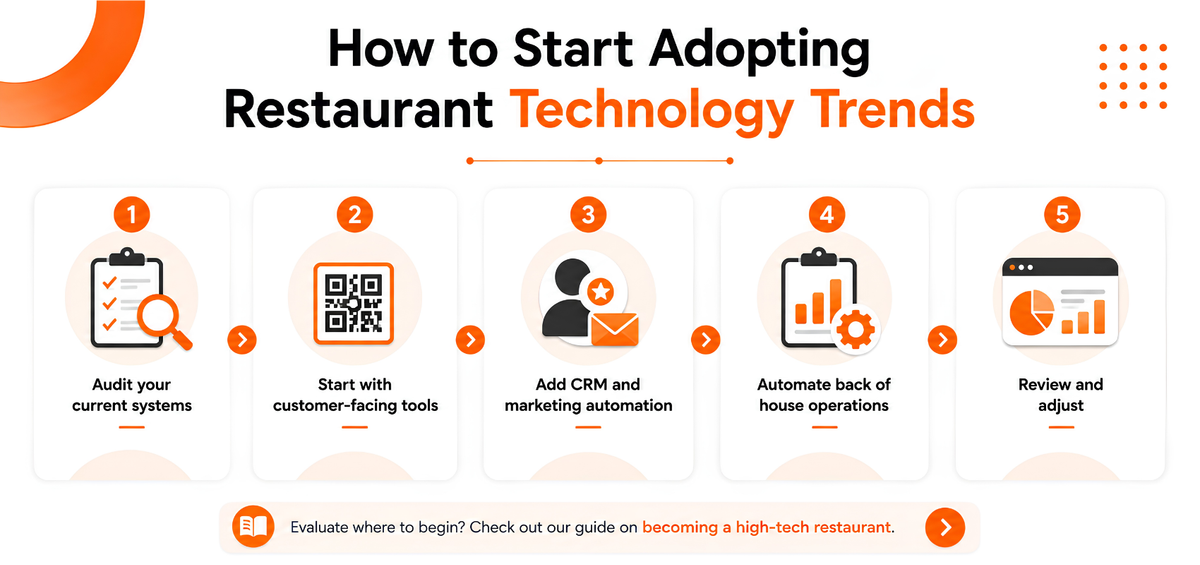
- Audit your current systems. Identify where staff spend the most manual effort, whether that's billing, inventory counts, or reservation management.
- Start with customer-facing tools. A reliable POS system and QR code ordering usually deliver the fastest, most visible improvement.
- Add CRM and marketing automation. Once ordering is digitized, use that data to build personalized campaigns and loyalty programs.
- Automate back of house operations. Bring in AI-driven inventory tracking and recipe costing once your front of house systems are stable.
- Review and adjust. Use your reporting dashboards regularly to see what's working and where further automation would help.
If you're evaluating where to begin, this guide on becoming a high-tech restaurant walks through the process in more detail.
Frequently Asked Questions
What are the key tech trends in the restaurant industry?
The major trends include AI-powered CRM, automated kitchen systems, QR code ordering, advanced POS technology, data analytics, mobile and contactless payments, and sustainable operations. Cloud-based systems like Windows POS are also part of this shift, along with growing attention to cybersecurity and staff training.
How is AI impacting the restaurant technology industry?
AI is automating routine tasks and streamlining operations, particularly in CRM, inventory management, and reporting. AI-powered chatbots and personalized marketing are also improving customer service and helping restaurants understand their customers better through order and feedback data.
What role does sustainability play in restaurant technology trends?
Sustainability is becoming a bigger factor as customers grow more eco-conscious. Restaurants are adopting energy-efficient kitchen equipment, reducing food waste through better inventory tracking, and using sustainable sourcing platforms to lower their environmental impact.
What are the benefits of integrating technology into restaurant operations?
Technology adoption improves customer satisfaction, speeds up service, and reduces manual errors. It also gives owners better visibility into sales, inventory, and staff performance, which supports faster and more informed decision-making.
Do these tech trends apply to other food and beverage businesses?
Yes. Most of the trends covered here apply just as well to cafés, cloud kitchens, food trucks, and bars and restaurants, not just full-service dining establishments.
Conclusion
The restaurant technology landscape keeps moving, and each of these trends offers a real opportunity to run a more efficient, profitable operation. Adopting them isn't just about keeping up with competitors, it's about building a restaurant that can adapt as customer expectations and operating costs continue to shift. The businesses that invest in the right restaurant management software today are the ones best positioned to grow tomorrow.
PosBytz is a restaurant ERP software that brings these technology trends together in one platform, including POS, online ordering, inventory management, AI-driven accounting, AI-enabled CRM, payroll, and QR code ordering.
Related Resources
- Why every restaurant needs CRM software for enhanced customer engagement
- Automating restaurant operations: the best ERP for restaurants to boost efficiency and growth
- Revolutionizing restaurants with ERP systems: boost efficiency and success
- Streamlining restaurant operations with restaurant ERP: a comprehensive guide for small restaurants
- Best accounting software for restaurants: a comparison study
- How restaurants are modernizing kitchens and streamlining orders
Want to see how these restaurant tech trends work together in one system? Explore PosBytz's restaurant ERP software to see how POS, online ordering, CRM, inventory, and accounting can run from a single dashboard.
About the author

Thaniyeal
Technical Content Writer & SEO Specialist, PosBytz
Thaniyeal is a Technical Content Writer and SEO Specialist on the PosBytz Marketing team, focused on turning complex POS and ERP topics into clear, practical guides for restaurant and retail businesses.