How to Start a Kirana Store Business in India
How to start a kirana store with simple business plan and procedure for opening a kirana store in India with all steps



Introduction
Thinking about starting a kirana store but not sure where to begin? You are not alone. Despite the rise of e-commerce and quick-commerce apps, neighborhood kirana stores have held their ground, and many even outsold larger supermarkets and online retailers during the COVID-19 pandemic. That period made it clear how essential kirana stores are to local communities.
So is starting a kirana store business still a profitable venture today? In most neighborhoods, yes. This guide walks you through what a kirana store business is, why it remains a solid investment, and exactly how to set one up, from planning and location to licensing, inventory, and sales growth.
What Is a Kirana Store Business?
A kirana store is a small neighborhood shop that sells everyday household essentials, typically groceries, vegetables, spices, and basic personal care items like oil and shampoo. Beyond serving as a quick-stop shop for daily rations, many kirana owners now set up their stores as mini-marts, letting customers browse and pick items themselves rather than asking over the counter.
Kirana stores serve the local community without targeting a specific demographic. Anyone can open one with reasonable funding and a chosen product mix. You don't need a special degree or formal training to run one, and the documentation required to get started is minimal. The sections below walk you through building a workable kirana store business plan.
Why Start a Kirana Store?
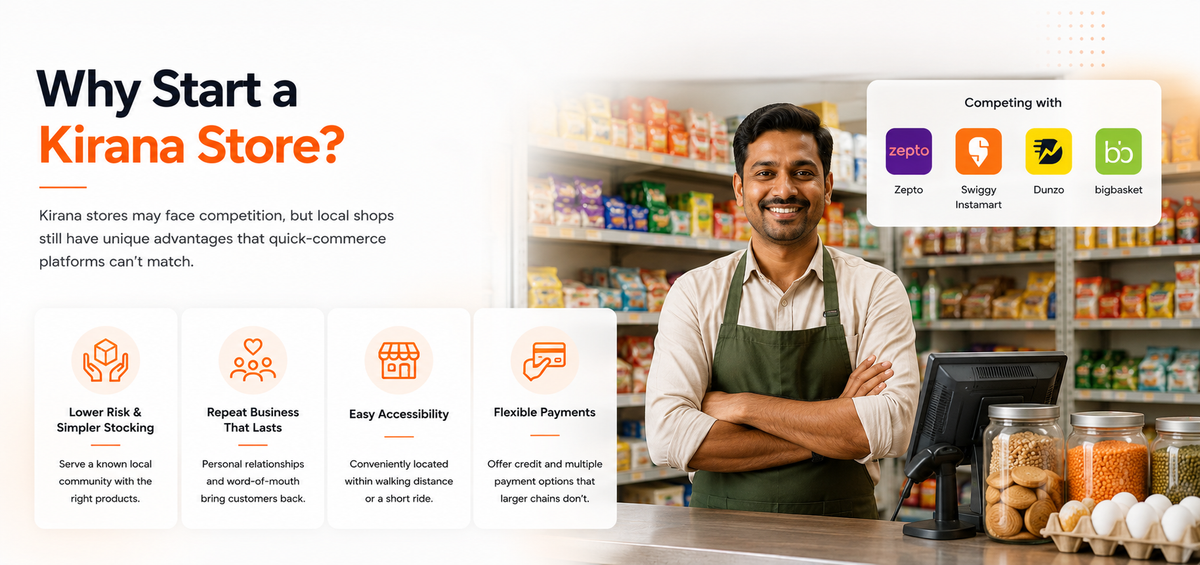
Kirana stores do face real competition from quick-commerce platforms like Zepto, Dunzo, Instamart, and BigBasket, especially in major cities. But that competition hasn't erased the advantages a local store has to offer.
Customers still value the personal touch a neighborhood shop provides, something large platforms struggle to replicate. Here's what makes a kirana store a worthwhile investment:
- Lower risk and simpler stocking, since you're serving a known local community rather than a broad market
- Repeat business driven by personal relationships and word-of-mouth referrals
- Easy accessibility for locals, often within walking distance or a short ride
- Flexibility to offer credit and other payment options that larger chains typically don't provide
How to Start a Kirana Store Business
Are you looking to start a Kirana store and still thinking ?
The world had begun to abandon neighborhood stores in favor of online shopping and home deliveries at any time. Whatever! Do you know that despite significant growth in e-commerce, many neighborhood corner shops across major cities surpassed the sales of many supermarkets and e-commerce giants during the pandemic? The COVID-19 pandemic showed us how important running Kirana stores are.
However, now the question is: is starting the Kirana Shop business a profitable venture so far? If yes, then how to start a Kirana store? In this guide, we’ve tried to cover every finer detail, from the Kirana store business plan to the set-up procedure, the required investment to the expected profit margin, etc. So, stay tuned till the end.
How to Start a Kirana Store Business?
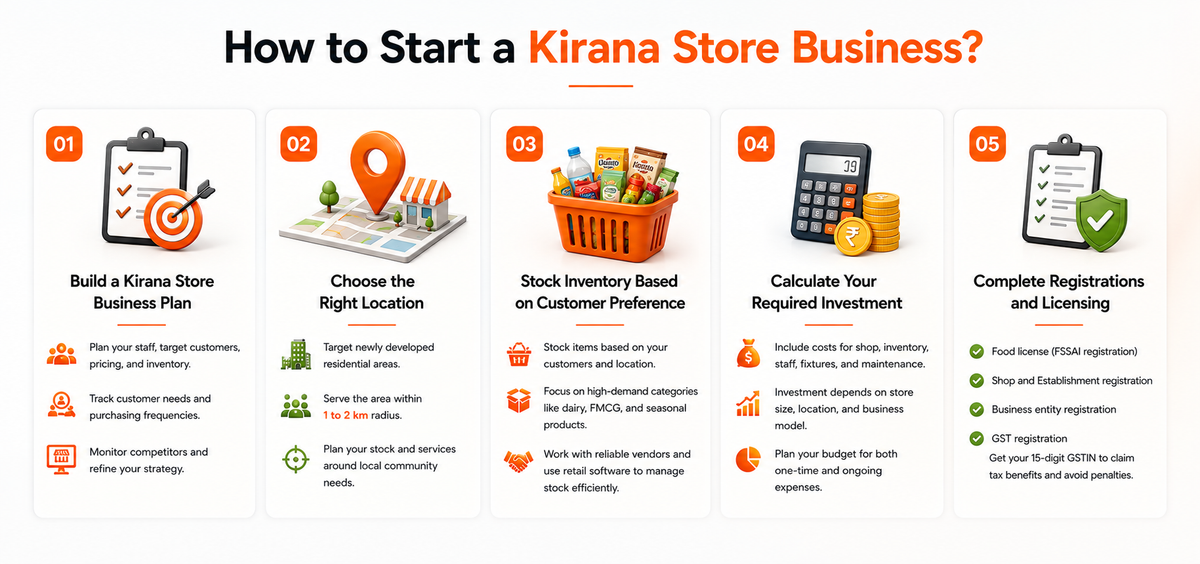
Starting a kirana store involves more than renting a shop and stocking shelves. Here's a step-by-step approach to setting one up properly.
Build a Kirana Store Business Plan
A business without a proper business plan is not a business at all. So, follow these steps to come up with a good business plan:
- Grocery stores generally require hard-working individuals. Keep this fact in mind while recruiting staff for your Kiran store.
- Identify potential buyers and analyze their choices and preferences to stock all possible items.
- Price your goods and commodities according to the financial status of the customers you are targeting.
- Figure out the best possible selling strategy by tracking customer needs and purchasing frequencies.
- Keep your competitors on track; monitor their marketing strategy, items, and the brands they mostly stock.
Choose the Right Location
Location can make or break a kirana store faster than almost any other decision. Newly developed residential areas are often a smart target, since commercial space tends to be more affordable there and your store gets visibility to an entire neighborhood as it grows.
Aim to serve the area within roughly 1 to 2 kilometers of your store, and plan your stock and services around what that specific catchment area needs.
Stock Inventory Based on Customer Preference
Your customer base will vary depending on your location, so your inventory should follow suit.
If you're opening in an upscale area, lean toward instant foods, frozen items, and a wider range of bakery products. In most neighborhoods, dairy, FMCG items like soaps and cosmetics, and in-demand seasonal products tend to offer good margins while helping you stay competitive.
Work with a reliable vendor to keep your inventory fresh and reasonably priced without compromising quality. Retail management software built for small stores can help you track stock levels, avoid overstocking, and cut down on wastage.
Calculate Your Required Investment
Add up every cost you'll incur: shop rent or property purchase, initial inventory, staff wages, fixtures, and ongoing maintenance. The total will vary significantly depending on whether you're opening a small standalone shop or a larger store, and on your city and locality.
Complete Registrations and Licensing
Certain registrations and permits are required to open a Kirana store, and some legal laws need to be abided by for operating that outlet. They are
- Food license (FSSAI registration)
- Shop and Establishment registration
- Business entity registration
- GST registration, which gives you a 15-digit GST identification number needed to avoid reverse taxation and claim applicable tax benefits
Once your paperwork and setup are in place, launch with introductory offers and discounts to attract your first regular customers.
How do I increase sales in my Kirana store?
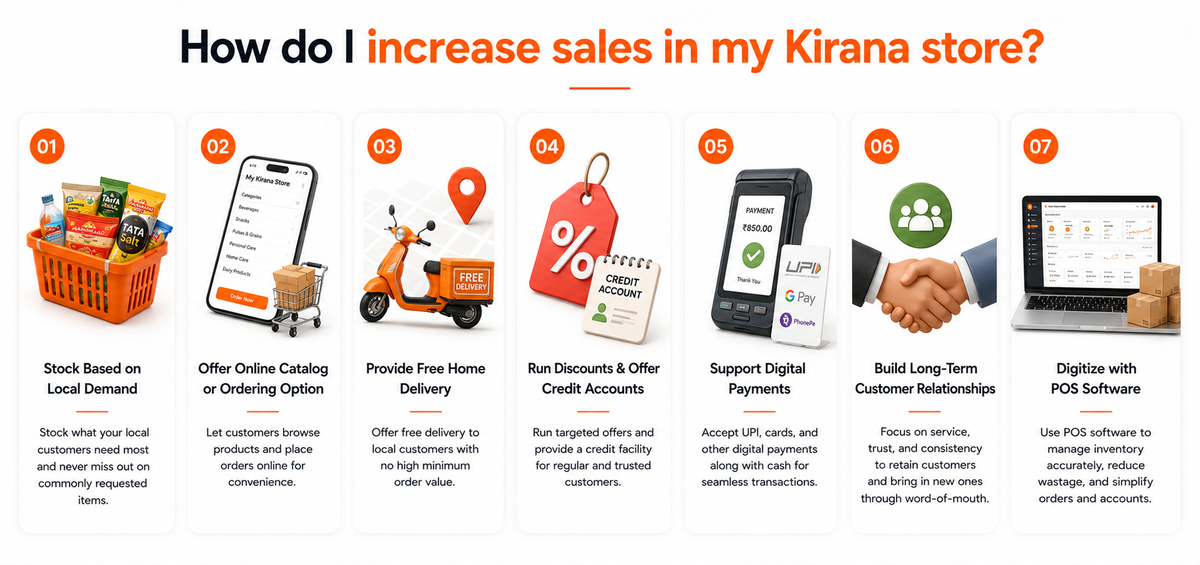
Competition among kirana stores is high, so generic marketing rarely moves the needle on its own. These practical steps tend to work better:
- Stock based on actual local demand, and avoid losing customers over commonly requested items you don't carry.
- Offer an online catalog or ordering option so customers can browse and order without visiting in person.
- Provide free home delivery for local customers, ideally without a high minimum order value.
- Run targeted discount offers and consider a simple credit account system for regular customers.
- Support digital payment options like UPI and cards alongside cash.
- Build long-term relationships with both new and repeat customers through consistent service.
- Digitize your store operations with POS software to keep inventory accurate, reduce waste, and simplify order and account management.
Frequently Asked Questions
How much investment is needed to start a kirana store in India?
Investment varies widely based on location, shop size, and inventory scope, and typically covers rent or property cost, initial stock, fixtures, and staff wages. A small kirana store in a residential area generally requires less capital than one in a commercial or high-footfall zone.
What licenses are required to open a kirana store?
At minimum, you'll need an FSSAI food license, Shop and Establishment registration, business entity registration, and GST registration if your turnover crosses the applicable threshold.
Is a kirana store business still profitable with quick-commerce competition?
Yes, in most neighborhoods. Quick-commerce platforms compete on speed and discounts, but kirana stores retain an edge through personal relationships, credit flexibility, and convenience for daily, unplanned purchases.
Do I need any special skills or a degree to run a kirana store?
No. Running a kirana store doesn't require formal qualifications. Basic bookkeeping, customer service, and inventory management skills are enough to get started, and these can be learned on the job or supported with simple POS and inventory software.
How can I manage inventory and billing efficiently in a kirana store?
Manual tracking works for very small stores but becomes error-prone as your product range grows. Cloud-based POS and inventory software lets you track stock in real time, generate bills quickly, and avoid running out of fast-moving items.
Conclusion
The pandemic changed how people shop, but when it comes to fresh produce and daily groceries, neighborhood kirana stores remain a trusted choice for most households. With the right business plan, location, inventory strategy, and licensing in place, a kirana store can be a genuinely profitable venture, even alongside quick-commerce competition.
Automate your store with PosBytz kirana store billing software to manage your inventory, sales, purchases, and reports from one place, and spend less time on manual bookkeeping and more time growing your customer base. Start Free Trial.
About the author

The PosBytz Marketing Team
Editorial Team, PosBytz
The PosBytz Marketing Team shares practical insights on running smarter restaurants and retail stores from POS best practices to inventory management, online ordering, and customer loyalty strategies.