Unified Commerce: Why Retail POS Needs It
See what unified commerce means for retail, how it differs from omnichannel, and how the right POS billing software connects every channel in real time.
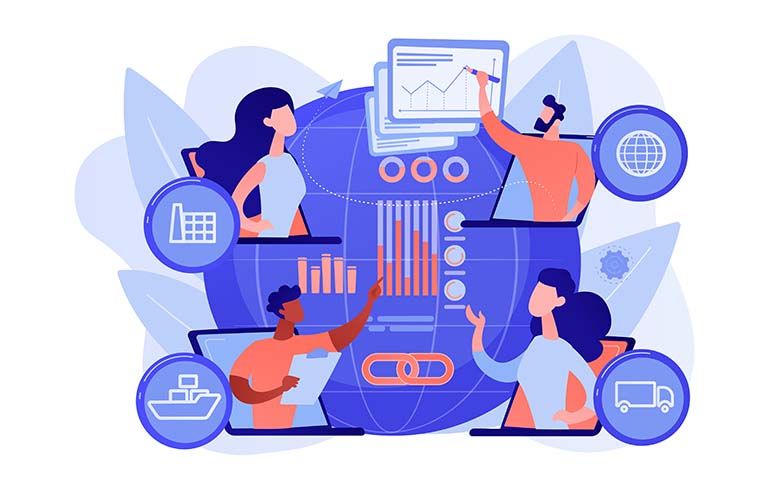


Anyone who has hosted their bridal shower over a Zoom meeting and ordered groceries online for the first time would understand the acceleration that the pandemic has brought to the digital world. A study conducted by Mckinsey shows that online shopping will continue to grow exponentially for different categories.
Thus, if you are planning to invest in your retail billing software you need to understand the categories that have high purchase intent by the consumers, deliver a personalized experience across all channels and incorporate a retail POS software that delivers a truly unified shopping experience.
Categories that will see an increase of over 35% in the number of online shoppers include essentials like groceries, over-the-counter medicines, personal care products and household items. There will also be a growth in the online customer base of more than 15% for skincare products, makeup, apparel, jewellery and accessories.
What is Unified Commerce?
Previously, a retail billing software was built to be convenient and offer fast checkouts. Currently, the capabilities of retail POS software include inventory management, flexible payment options, customer relationship management and the ability to generate real-time powerful sales reports. Unified commerce offers your customers to have a seamless experience across all channels.
For example, if your customer in the retail shop is not able to find a particular item, you can easily look at the inventory level of your other branches and offer them the delivery of the particular item right at their doorstep. This can be done seamlessly through Posbytz’s retail POS software. As a retail shop owner, investing in a retail billing software that offers unified commerce is important if you do not want your customers to switch to a retailer that does. Currently, most retailers follow an omnichannel commerce model.
The future of POS billing software for retail shops combines the use of smart technologies like machine learning, artificial intelligence, predictive analytics and the internet of things. This helps business owners generate real-time reports and make time-sensitive decisions to help in the future growth of the business. This is where unified commerce plays a major role in the consolidation of the data from different channels in order to create a flexible digital journey to meet customer expectations.
Unified Commerce Vs Multichannel Commerce Vs Omnichannel Commerce
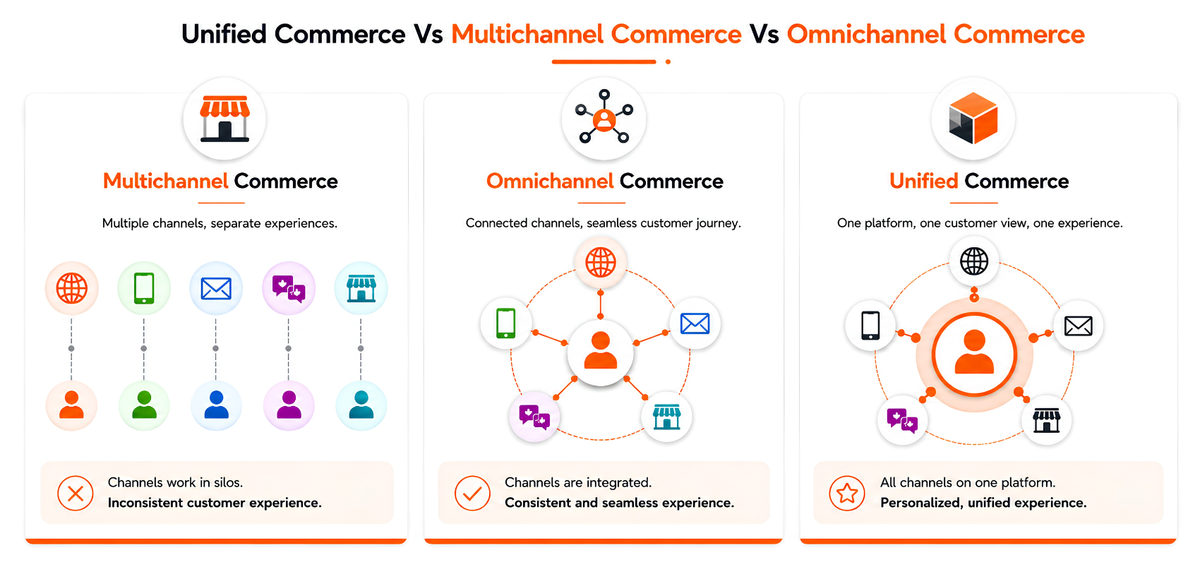
Unified commerce is the next evolution of omnichannel commerce, and omnichannel was the next step of multichannel commerce. Let us look at each step in more detail.
Multichannel:
As the name suggests, this refers to the involvement of different channels such as web pages, mobile applications, emails and social media to generate high brand awareness among the customers for the retail shop owner. However, the main problem of multichannel experience is the inconsistency across the different channels. For example, you may have a great website that is interactive but has poor content on your Facebook and Instagram pages. You also need to make sure that your website is optimized for smartphone usage, else you might lose a large chunk of customers to another competitor.
Omnichannel:
Omnichannel solves the problem of inconsistency across channels and ensures that the customer experience across the channels is uninterrupted. This ensures a seamless customer journey for your brand. Retail billing solutions with an omnichannel approach helps the retail shop owner interact with customers across a variety of online marketplaces and target specific audiences. However, each channel has to be managed by its own unique interface which may be time-consuming for the business.
Unified Commerce:
The main advantage that unified commerce offers is the ability to consolidate the customer data into a centralized, single-pane view. Thanks to the ability to view multichannel transactions by customers, unified commerce enriches the customer experience by offering personalized offers that convert browsing into immediate purchases. This is why retail billing solutions equipped with unified commerce are said to redefine the future of retail shopping.
How Does Retail Billing Software Benefit From Unified Commerce?
1.Automation
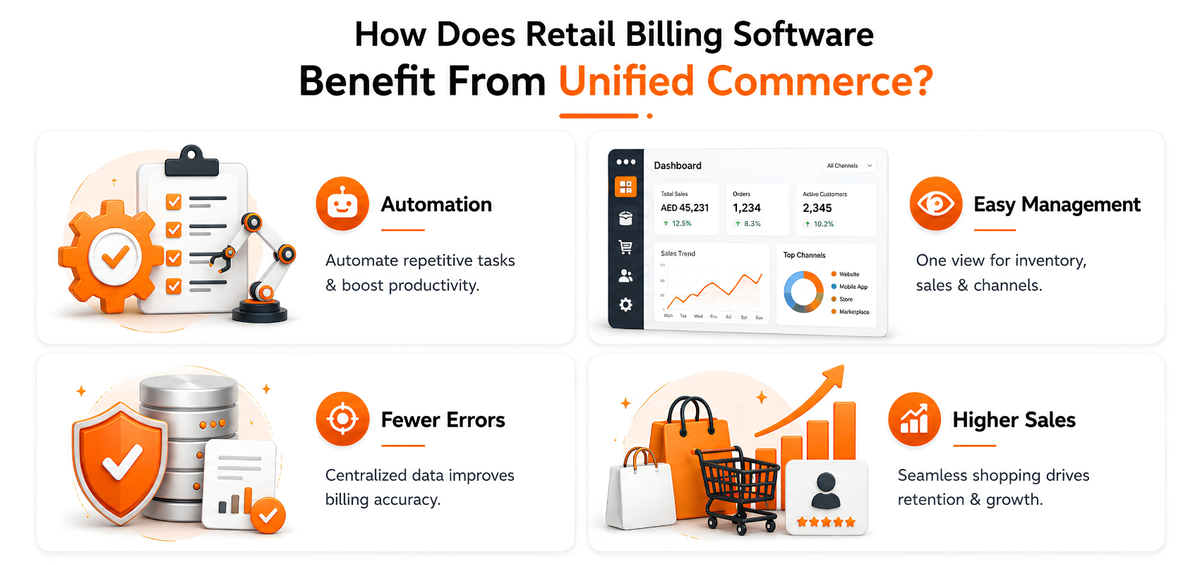
The unified POS billing software for retail shops helps improve employee productivity by automating time-consuming manual tasks. It also provides a powerful centralized platform to help streamline the operations efficiently.
2.Easy management
Unified commerce ensures high visibility of business processes, thus facilitating efficient management of the different business levels. Retailers can get real-time updates of their inventory levels, view transactions across different channels and make decisions without delay. This ensures that there is no wastage of inventory and keeps optimal levels of stock in hand.
3.Reduction of errors
The transparency offered by the centralized platform helps retailers avoid making billing errors and ensures better accuracy of data. The combination of predictive analytics and artificial intelligence helps you optimize your costs and anticipate the customer demand better.
4.Higher Sales
Unified commerce provides better control to the customers over their shopping experience due to the integration of eCommerce channels with other retail systems. Customers can view the inventory levels, see the latest pricing and also view their shopping activities across the channels. This means all the purchases, returns and exchanges are visible to them in a single unified view. This helps to retain your existing customer base and also acquire new customers
What to Look for in a Unified Commerce POS
Not every platform that claims to be "unified" actually connects its systems in real time. When evaluating retail billing software, look for these core capabilities:
- A single data core: POS, inventory, online orders, and customer profiles should live in one database, not sync periodically between separate tools.
- Real-time inventory sync: Stock levels should update instantly across in-store, online, call orders, and delivery aggregators, with automatic stop-selling when an item hits zero.
- Flexible fulfillment: Support for dine-in, takeaway, delivery, and online orders from a single screen, along with the ability to fulfill an online order from the nearest outlet.
- Unified customer profiles: One CRM record per customer that tracks purchase history, loyalty points, and preferences across every channel they use.
- Native integrations: Built-in connections to delivery aggregators, payment terminals, and online ordering, rather than third-party workarounds that can fall out of sync.
- Centralized reporting: Live dashboards that show sales, inventory, and staff performance across all outlets from one screen.
How to Move Your Retail Business to Unified Commerce
Shifting from disconnected tools to a unified system is a gradual process. Here is a practical order to follow:
- Map your current channels and systems. List every place you sell (store, website, app, marketplaces) and every tool you use for billing, inventory, and customer data.
- Choose one platform for POS, inventory, and online orders. A cloud POS system that handles billing and inventory together removes the need for separate software that has to be manually synced.
- Centralize your inventory across outlets and channels. Move to real-time stock tracking so every channel shows the same, accurate inventory count at all times.
- Bring customer data into one CRM. Consolidate purchase history and loyalty activity from every channel into a single CRM so marketing and service teams see the same customer record.
- Connect your online store and delivery channels. Link your online ordering and omnichannel selling platform to the same backend as your in-store POS, rather than running it as a separate system.
- Monitor performance and refine. Use centralized reports to compare outlets, spot stock issues early, and adjust based on what the data shows.
How PosBytz Supports Unified Commerce for Retail
PosBytz's retail billing software runs POS, inventory, CRM, and online ordering on one cloud platform, so retailers do not have to reconcile data between separate systems. Inventory updates automatically across in-store, online, and delivery aggregator orders, low stock alerts trigger before you run out, and customer purchase history feeds directly into loyalty campaigns and repeat-order marketing. Multi-outlet reporting gives you a single dashboard to compare performance across every location.
Get Posbytz to bring your billing, inventory, and online channels onto one system so your digital and in-store operations stay aligned.
Conclusion
Unified commerce is no longer a future concept for retailers, it is the standard customers expect when they move between your store, your website, and your delivery channels. Retail billing software that connects POS, inventory, CRM, and online ordering on one platform removes the manual syncing that causes stock errors and inconsistent pricing, and it gives you the real-time visibility needed to turn browsing into sales across every channel.
If your current setup still relies on separate tools for billing, inventory, and online orders, that is the gap to close first. Get Posbytz to run your retail business on one connected platform built for unified commerce.
Frequently Asked Questions
What is unified commerce in retail?
Unified commerce is a retail model where POS, inventory, online orders, and customer data all run on one connected platform instead of separate systems that need to be synced manually. It gives you one accurate, real-time view of stock, pricing, and customers across every channel.
How is unified commerce different from omnichannel retail?
Omnichannel retail connects the customer-facing experience across channels so shopping feels consistent, but the back-end systems, like inventory and CRM, often still run separately and need syncing. Unified commerce connects both the front end and back end on a single platform, removing that syncing step entirely.
Does a small retail business need unified commerce?
Any retailer selling through more than one channel, such as a store plus a website or delivery aggregator, benefits from unified commerce, since it prevents stock mismatches and reduces the manual work of updating multiple systems. Smaller businesses often see this benefit sooner because they have fewer staff to manage disconnected tools.
What features should a unified commerce POS have?
Look for real-time inventory sync across all channels, a single customer database shared with your CRM, support for dine-in, takeaway, delivery, and online orders from one screen, native integrations with delivery aggregators and payment terminals, and centralized reporting across outlets.
How do I start moving my retail business to unified commerce?
Start by mapping every channel and tool you currently use, then move your POS, inventory, and online orders onto a single platform rather than separate software. From there, centralize your customer data into one CRM and connect your online and delivery channels to the same backend as your in-store system.
Related Resources
About the author

The PosBytz Marketing Team
Editorial Team, PosBytz
The PosBytz Marketing Team shares practical insights on running smarter restaurants and retail stores from POS best practices to inventory management, online ordering, and customer loyalty strategies.