What Do You Need to Know About a Delivery POS System?
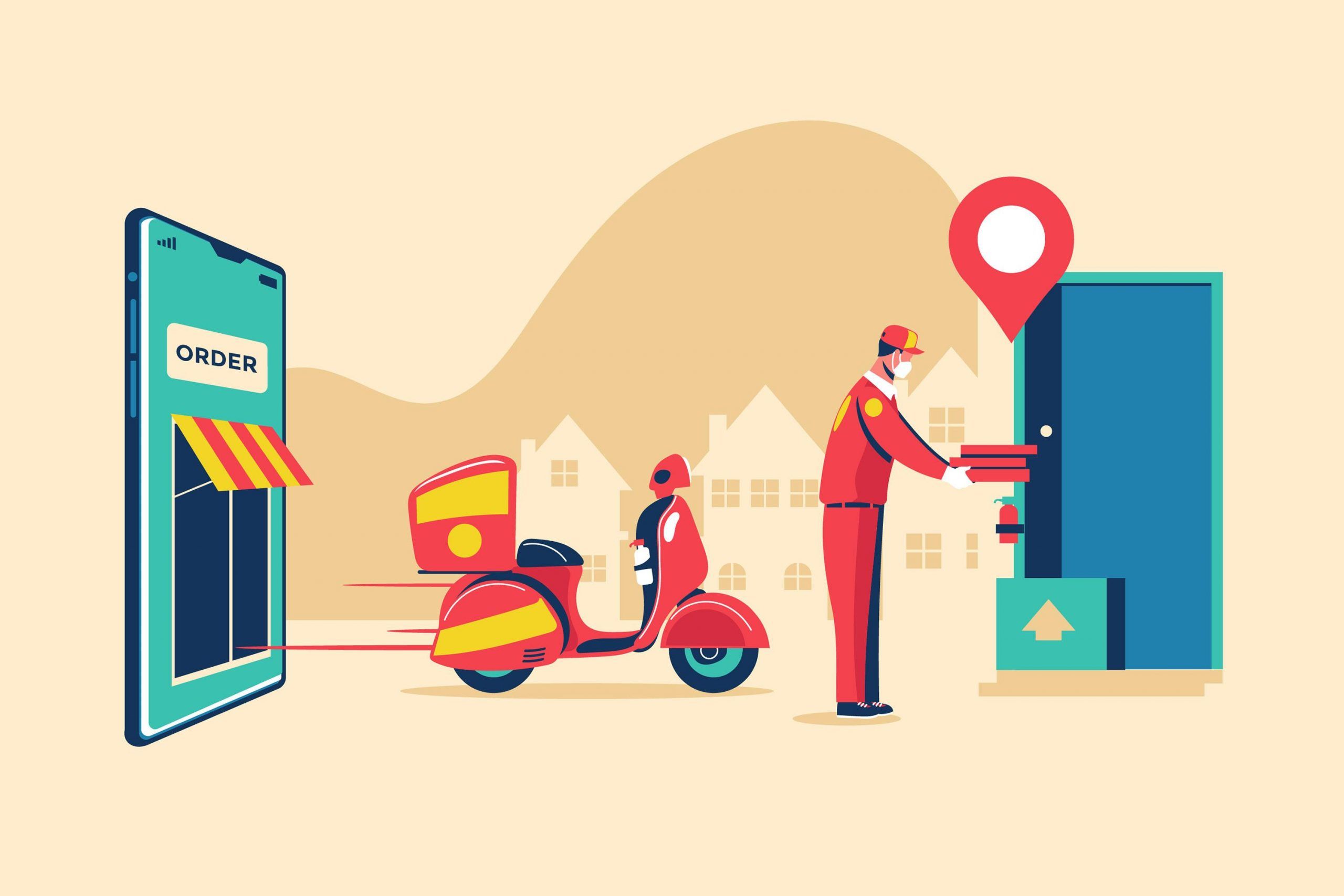
Nowadays, having an online food delivery management system is essential to run your restaurant operations efficiently, increase the number of incoming orders, and also serve a wider customer base.


Introduction
In this blog, you will know more about the Delivery POS system and online delivery aggregators like Hunger Station, Jahez, Careem, Deliveroo, Just Eats, DoorDash, Postmates, Talabat, Uber Eats, Zomato, Swiggy which help promote your business. The key takeaway of the blog is the importance of third-party party online delivery POS Integration.
Online food aggregators like Zomato, Swiggy, Talabat, Deliveroo have been working to improve their platform and dominate the food space even before the pandemic. The global online food delivery market is one of the fastest-growing industries gaining traction in the CAGR at a double-digit rate. In fact, it is predicted that by the year 2026, the industry will have an explosive estimate of 28.95%.
Nowadays, having an online food delivery management system is essential to run your restaurant operations efficiently, increase the number of incoming orders, and also serve a wider customer base.
Why Delivery POS Systems Are Growing So Fast
Online food ordering has moved from a convenience to an expectation. A few shifts in customer behavior explain why restaurants have had to adapt their point-of-sale setup to keep pace.
Changing Customer Habits
Busier schedules and the convenience of one-tap ordering have pushed more customers toward home delivery instead of dining out. Many diners who started ordering online during the pandemic have simply kept the habit, browsing menus and trying new cuisines from home rather than visiting in person. For restaurant owners, that means order volume from delivery channels can now rival or exceed in-house dining, making it essential to track and fulfill those orders accurately. Integrating with platforms like Zomato and Swiggy gives restaurants access to a much larger pool of ready-to-order customers.
Smartphone-First Ordering
Customers increasingly expect to order and pay from their phones rather than wait in line at a counter. This has shifted a large share of order volume to mobile apps and aggregator platforms, which means a restaurant's POS needs to receive and process those orders automatically, not manually re-key them.
More Dual-Income Households
As more households have two working adults, there is less time available for meal preparation, and more willingness to spend on delivered food. This steady demand adds another reason for restaurants to treat delivery as a core sales channel rather than an occasional extra.
How to Integrate a Delivery POS System with Online Ordering Platforms
A POS system sits at the center of restaurant operations. It gives you a single view of inventory, payments, and order volume across every channel. When a third-party delivery platform is properly integrated with it, an order placed on Zomato or Swiggy flows straight to your kitchen printer or kitchen display system, your staff gets notified automatically, and the payment reconciles against the order without manual entry.
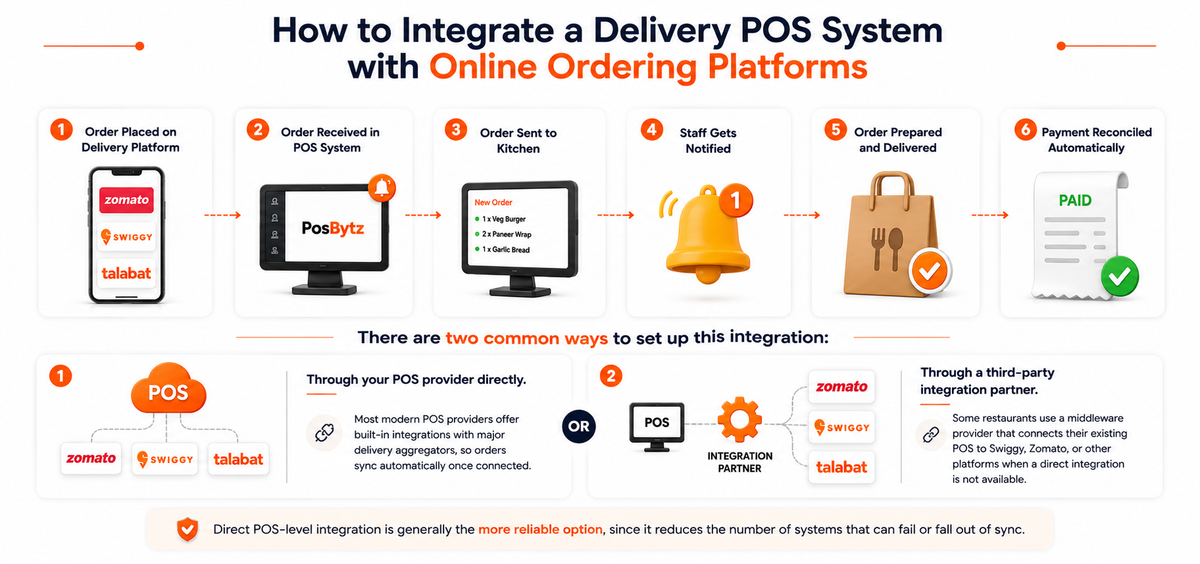
There are two common ways to set up this integration:
- Through your POS provider directly. Most modern POS providers offer built-in integrations with major delivery aggregators, so orders sync automatically once connected.
- Through a third-party integration partner. Some restaurants use a middleware provider that connects their existing POS to Swiggy, Zomato, or other platforms when a direct integration is not available.
Direct POS-level integration is generally the more reliable option, since it reduces the number of systems that can fail or fall out of sync.
Benefits of Combining Your POS with Online Ordering
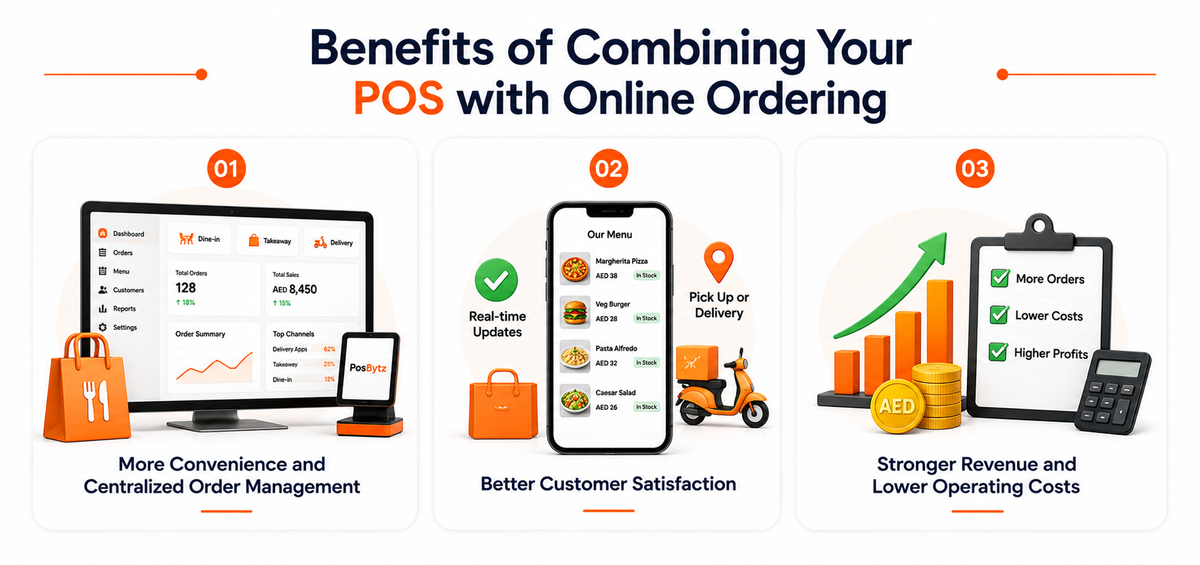
More Convenience and Centralized Order Management
A connected delivery POS system shows every incoming order, dine-in, takeaway, and delivery, on a single dashboard. This removes the need to manually check multiple tablets for different platforms and gives you real-time visibility into sales, staff productivity, and customer activity.
Better Customer Satisfaction
Customers do not have to wait in line, and they can choose whether to pick up their order or have it delivered. Menu changes, such as marking an item out of stock, update across every channel in real time, so customers are not able to order something that is unavailable. That reduces cancellations and avoids a frustrating experience for the customer.
Stronger Revenue and Lower Operating Costs
Restaurants that integrate with third-party delivery platforms often see a meaningful increase in order volume simply from the added visibility on those apps, since customers browsing Zomato, Swiggy, or Talabat can discover and order from a restaurant they might not have found otherwise. On the operations side, automated order routing to the kitchen reduces the staff hours needed to manage incoming orders manually, which helps control payroll costs during busy periods.
Delivery Aggregator Integrations to Know
Posbytz integrates with several major food delivery platforms, each useful depending on your market:
- Talabat: One of the fastest-growing delivery platforms in the MENA region, particularly relevant for restaurants in Qatar and the wider Gulf. See how Talabat POS integration works.
- Deliveroo: Connects restaurants with customers across the UK and other markets, with orders flowing directly into your POS for fast fulfillment.
- Uber Eats: Orders placed through Uber Eats sync directly into your order management system, so kitchen staff see them alongside dine-in and takeaway orders.
- Zomato: Gives customers the ability to browse menus, rate dishes, and place orders, with a POS integration giving restaurant owners a single view of every Zomato order.
- Swiggy: One of the most widely used food delivery apps, with integration allowing restaurants to manage Swiggy orders from the same screen used for every other channel.
Choosing the Right Delivery POS System
When evaluating a delivery POS system, look for a few things beyond basic order syncing: automatic menu and price updates across channels, real-time stock availability so items go out of stock automatically when inventory runs low, a free delivery app or rider tracking option if you manage your own delivery staff, and reporting that breaks down sales by channel so you can see which aggregators are actually driving profitable orders.
Frequently Asked Questions
What is a delivery POS system?
A delivery POS system is a point-of-sale setup that connects your restaurant's billing and order management to online and third-party delivery channels, such as your own website, app, or aggregator platforms like Zomato and Swiggy, so every order lands in one place.
How does a delivery POS system integrate with platforms like Zomato and Swiggy?
Integration is usually done either directly through your POS provider, which offers built-in connections to major aggregators, or through a third-party middleware partner. Once connected, orders placed on the aggregator app sync automatically into your POS and kitchen without manual re-entry.
What are the main benefits of a delivery POS system?
It centralizes orders from multiple channels into one dashboard, reduces manual entry errors, keeps menu and stock availability updated in real time across platforms, and gives you reporting on which channels are generating the most revenue.
Which delivery aggregators can a restaurant connect to a POS system?
Common integrations include Zomato, Swiggy, Talabat, Deliveroo, Uber Eats, and other regional aggregators, depending on the market a restaurant operates in.
Is a delivery POS system necessary for a small restaurant?
Yes, even small restaurants benefit once they start taking orders from more than one channel. Without integration, staff have to manually track separate tablets or apps for each platform, which increases the chance of missed or delayed orders as order volume grows.
Conclusion
A delivery POS system is no longer an optional add-on for restaurants that take orders beyond the dining room. As more customers order through apps and aggregator platforms, having every channel connected to a single POS keeps order accuracy high, reduces manual work for staff, and gives owners a clearer picture of where their revenue is actually coming from.
If you are running a restaurant that takes orders from Zomato, Swiggy, Talabat, Deliveroo, or Uber Eats, Posbytz can connect all of them to a single POS and order management system, so your team can manage dine-in, takeaway, and delivery from one screen.
Related Resources
About the author

Saravana Damodaram
Co-Founder & CEO, PosBytz
Saravana Damodaram is the Co-Founder & CEO of PosBytz, a cloud-based POS-ERP platform built for F&B and retail businesses since 2018. He focuses on unified commerce, inventory, and multi-location operations, and has helped over 5,000 merchants across 25+ countries move off fragmented, disconnected tools and run their entire operation, billing, inventory, kitchen, and accounting on one platform.