Cloud POS vs Traditional POS: A 2026 Restaurant Comparison
Cloud restaurant pos offers flexibility and real-time access, unlike traditional POS systems. Explore features and benefits with detailed comparison.


Running a restaurant is a lot harder than dining in one, and the point of sale system you choose has a direct effect on how smoothly your operations run. With technology advancing every year, most restaurant owners now face the same decision: cloud POS vs traditional POS.
Both options work, but they solve different problems. This guide breaks down what each system offers, where they fall short, and how to decide which one fits your restaurant.
What’s a Traditional POS system?
Traditional POS systems are also called On-premise or legacy POS. It helps store your data on a local server or system and operate on a closed internal network. For instance, remember those days you stored movies or songs on your computer hard drive? You couldn’t operate it from a remote. But today, you can stream movies via Netflix
So traditional restaurant POS systems are like data stored on a hard drive or google drive that can’t be accessed from everywhere.
With technology advancing every day, you might have a biased thought from the beginning that in this Cloud restaurant POS system vs Traditional POS battle, the former will win. But you can’t get to the conclusion before reading what the traditional POS has to offer. Let’s dive in to learn.
Advantages of Traditional POS:
Independent on the internet:
Traditional POS restaurant systems are not dependent on the internet. So when you install it on the device, it can be accessed without the internet
Minimal operating cost:
POS software is a one-time investment. That, too, traditional POS calls for only one-time charges followed by maintenance charges as there won’t be any updates to the software
Extensive display setup:
Have you seen that boxy black terminal at restaurant counters surrounded by keyboard, printer, and credit card payment devices? Well, those are traditional POS. They usually come with large screens but provide stable and easy-to-use features.
Disadvantages of Traditional POS:
Traditional POS systems are old-school:
Integrating other solutions such as accounting software or online ordering platforms is very difficult given the system is designed to operate offline and to upgrade the traditional POS software is challenging or impossible
Frequent data backups:
Since data is stored on the hard drive, you must take frequent backups to ensure it is safe. There couldn’t be a possibility that the data could be lost at any point with hard disk corruption. As per statutory requirements, it is minimum required to maintain at least 3 -5 years of transactions from your POS.
Expensive:
Traditional POS systems have high upfront costs and consume more time to deploy. If the system crashes, the re-installations cost extra. Also, it demands a maintenance fee because the software needs to update regularly.
What is a Cloud Restaurant POS System ?
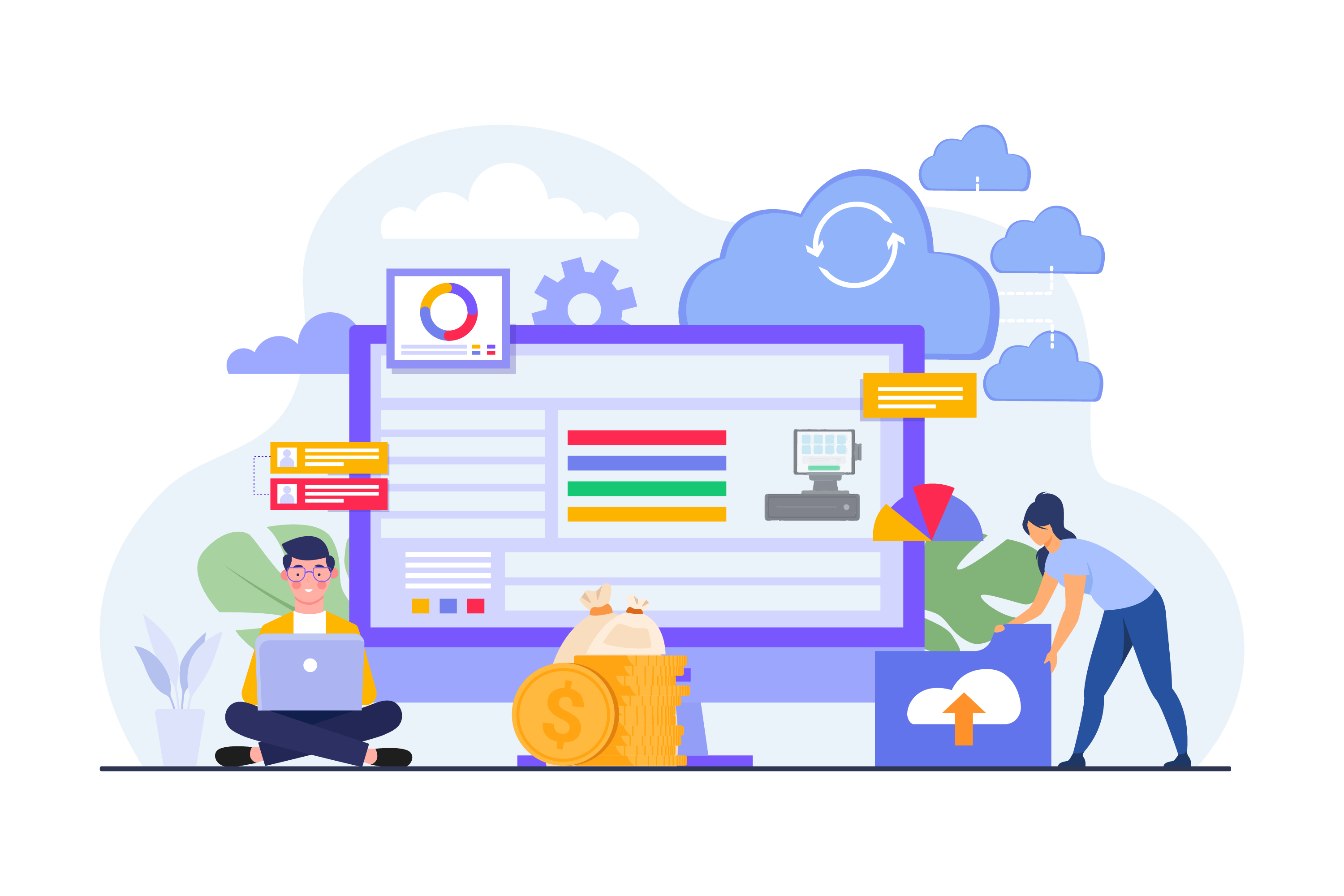
Cloud-based POS is a Software-as-as-Service(SaaS) platform where you can store your data and information on an online server. So you can access it remotely using the internet.
This web-based solution allows restaurant owners and managers to access the system without being physically present in the outlet to execute business operations. Contrary to the traditional POS, the Cloud based Restaurant POS systems are also scalable, and they can incorporate new features.
Advantages Of Cloud Restaurant POS
Cost efficiency:
Cloud POS systems don’t demand upfront costs. Since it is a SaaS, it follows a subscription model of a monthly or yearly fee. The best part is that installation is super-easy.
No need for software update:
You don’t have to spend time upgrading it as Cloud POS is always up-to-date. New features will always been pushed whenever there is a new release.
Business Insights:
Track all transactions and view the information anywhere at any time.
Data Security:
As the data is stored in the cloud, it stays secure. There is no need to worry about data loss even if the device is damaged or if it is prone to cyberattack. The data saved in the cloud is there to rescue.
Drawbacks Of Cloud Restaurant POS
Expensive additional costs:
Well, you just read Cloud-based POS is cheaper than the traditional ones, and this point contradicts, right? Let’s make it clear; it costs extra if you get POS from a distributor and not directly from the POS company.
This is why investing in the best cloud restaurant POS software is highly recommended. The company covers the installation, training, and technical support, and you can get started quickly.
Less personalization:
SaaS lacks customization options. Though this isn’t a significant issue for smaller businesses, larger ones may prefer to opt for tech that can be personalized for their brands
Cloud POS vs Traditional POS: Key Differences
By now, you must have had a glimpse of where the traditional POS and Cloud-based systems stand in the competition. But after complete analysis, we managed to point out how they differ from each other.
High security & less maintenance
Anyone can access the traditional POS system, steal data, or carry out unwanted activities. But in terms of the Cloud POS system, the data is stored in the cloud and is password-protected. So it’s safe. No local storage is necessary.
Real-time updates
Updating the server manually is quite a hectic process in Traditional restaurant POS systems. It consumes time and much effort.
Cloud POS systems don’t need any maintenance as the updates happen in real-time and automatically. So the system stays updated with the latest cloud restaurant POS software version.
Data Accessibility
As a business owner, you must track sales, employee clock-in intervals, or other data. Imagine this scenario where you must be physically present at the outlet every time to track all these? Sounds hectic?
Not anymore if you have a Cloud-POS system. Access any data anywhere using the restaurant analytics with a click of a button.
Operate offline
You might wonder how this is possible. It’s simple. The data you operate on the Cloud POS system gets stored in your browser’s cache memory, and the moment you go online, it gets updated on the cloud. So you don’t have to worry about internet outages. So you can continue to accept credit card transactions safely.
Complete Integrated Systems
With Cloud restaurant POS software, you can simplify restaurant operations by integrating online ordering, loyalty, and payment management into a single platform.
Not tied to hardware
One major disadvantage of traditional POS systems is that the bulky systems are not portable. But Cloud based POS software is mobile and tablet friendly. So you can manage the operations using these hand-held devices. However, they have short battery life and must be constantly connected to the charger.
Cost-effective
In terms of cost, traditional POS systems have high upfront costs, and the software must be updated manually on-site.
Cloud-based POS is cheaper as it doesn’t have complex installations and updates automatically. However, they follow a subscription pricing model that can differ based on the brand and size of the business.
Traditional POS vs. Cloud Restaurant POS – Which is best?
Now that you have skimmed over the important features of both POS systems, does it look like a tie-up? Or Cloud-based POS seems to win? There is no straightforward answer for Cloud-based POS vs Traditional POS because both types have pros and cons. And they are widely opted for by different restaurants.
If your restaurant is located in areas with low internet connectivity, requires high customization and extensive features, and has more offline operations, then traditional POS systems must be considered.
If you run restaurant businesses with multiple outlets spread across a region where employees need access to the POS software 24*7 from anywhere using the internet, then choose Cloud-based POS systems.
Conclusion
POS is a one-time investment, so you must analyze both pros and cons before opting for either type. If you are looking for a new restaurant POS system, choose the Cloud POS system. Because the traditional POS systems will be replaced by the Cloud-based Restaurant POS shortly, with the world embracing more technology daily.
Also, with neck-to-neck competition in the restaurant businesses, we must upgrade ourselves to stand out from the competition.
If Cloud-based POS software looks promising, we highly recommend checking Restaurant POS software by PosBytz. PosBytz is one best Restaurant Management software from POS, inventory management, Accounting, QR code ordering, CRM, Payroll , Restaurant Online ordering and more.
Frequently Asked Questions
What is the main difference between cloud POS and traditional POS?
The main difference is where data is stored and accessed. A traditional POS keeps data on a local device or server that's only accessible on-site, while a cloud POS stores data on remote servers, letting you access it from anywhere with an internet connection.
Is cloud POS more expensive than traditional POS?
Not usually. Cloud POS systems run on a subscription model with little to no upfront hardware investment, while traditional POS systems require a large one-time payment plus ongoing maintenance fees. Over time, a cloud POS is often the more cost-effective choice, though this can vary by provider and restaurant size.
Can a cloud POS work without internet?
Yes. Most modern cloud restaurant POS systems support offline billing, storing transactions locally and syncing them automatically once the internet connection is restored, so service doesn't stop during a short outage.
Which is more secure, cloud or traditional POS?
A cloud POS system generally offers stronger security since data is stored on password-protected remote servers rather than a single local device. A traditional POS keeps all data on-site, which puts it at greater risk if the hardware is damaged, lost, or accessed without authorization.
How do I switch from a traditional POS to a cloud POS?
Start by evaluating your current hardware, menu structure, and reporting needs, then choose a cloud POS provider that supports data migration and offers onboarding support. Providers like PosBytz typically handle setup, staff training, and menu migration as part of the transition.
Related Resources
About the author

The PosBytz Marketing Team
Editorial Team, PosBytz
The PosBytz Marketing Team shares practical insights on running smarter restaurants and retail stores from POS best practices to inventory management, online ordering, and customer loyalty strategies.