The Ultimate Guide to Choosing the Best ERP for Small Business
Discover how cloud based ERP systems revolutionize small businesses with key considerations and top solutions for efficiency & growth.


Choosing the best ERP for small business is one of the more consequential software decisions an owner makes. The right system connects billing, inventory, accounting, and customer data into a single platform, while the wrong one adds complexity without fixing the problems it was bought to solve. This guide covers what an ERP system actually does, why cloud based ERP for small business has become the standard choice, which features are worth prioritizing, and how to evaluate vendors so your budget goes toward capability your team will actually use.
What Is an ERP System, and Why Does Your Small Business Need One?
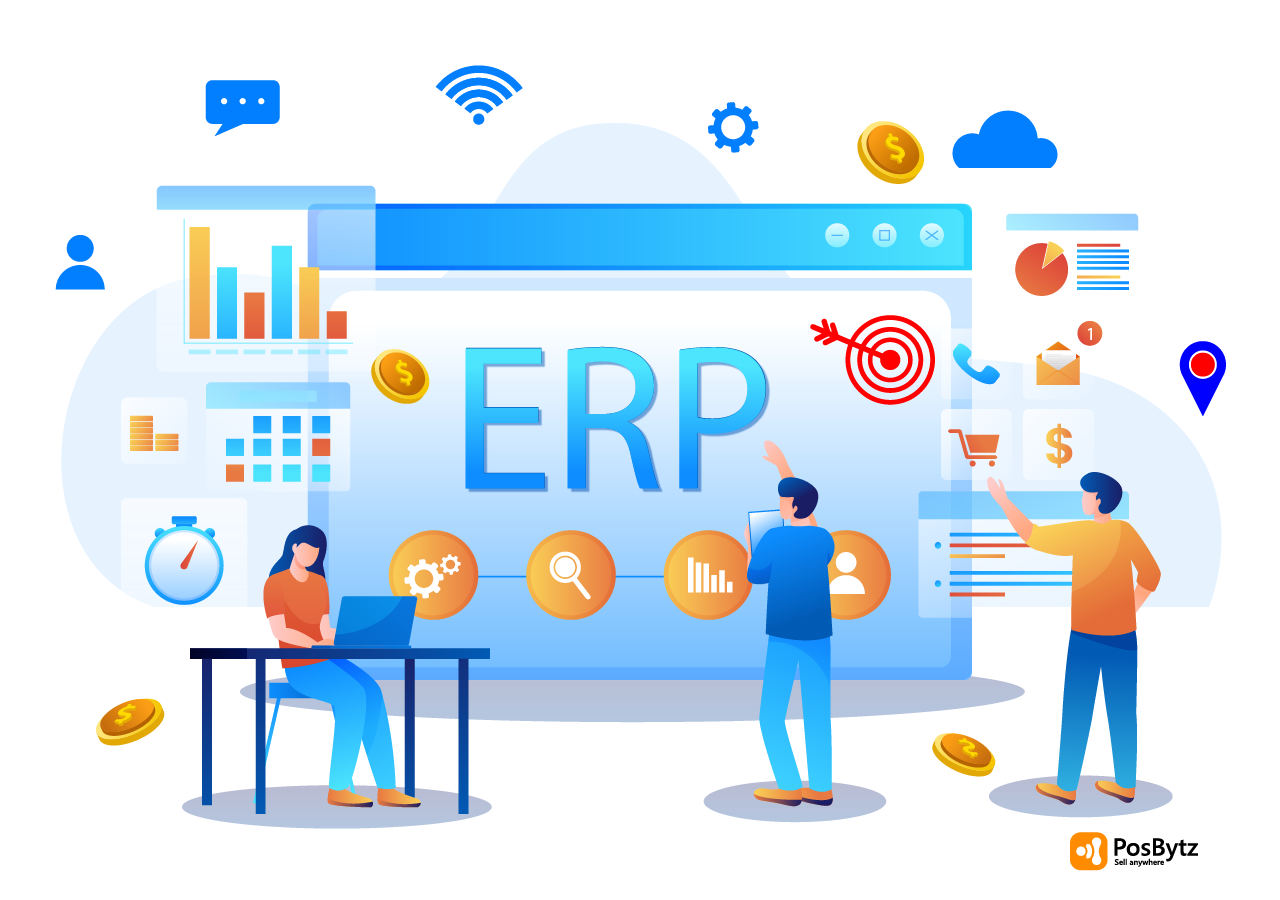
ERP (Enterprise Resource Planning) software is an integrated system that centralizes core business processes, including accounting, inventory, sales, HR, and customer relationship management (CRM), in one place instead of spreading them across disconnected spreadsheets and single-purpose apps. For a small business, this matters because manual reconciliation between separate tools is where errors, delays, and blind spots creep in.
A good ERP software for small business gives you a single source of truth: stock counts that match what is actually on the shelf, sales numbers that update in real time, and financial reports you do not have to rebuild by hand at month end. That combination of centralized data and automated workflows is what makes ERP software for small business worth the switch from basic accounting tools or spreadsheets.
Why Choose a Cloud ERP for Small Business?
Traditional ERP systems were on-premise, requiring significant upfront investment in servers, licenses, and in-house IT maintenance. Cloud technology changed that. A cloud erp for small business now runs as a subscription service you access through a browser, which is why it has become the default choice for growing operators. Choosing a Cloud ERP offers several practical advantages:
- Lower upfront cost: A cloud based ERP for small business runs on a subscription model, so you avoid the large capital outlay that on-premise systems require.
- Scalability: Cloud systems flex with demand. Whether you are adding a new outlet or handling a seasonal spike, erp software for small business can scale up or down without a system overhaul.
- Accessibility and flexibility: With cloud ERP, you and your team can check sales, stock, or reports from any internet-connected device, whether you are on the shop floor or off-site.
- Automatic updates and maintenance: The provider handles patches, security updates, and new features, so your team is not stuck managing infrastructure.
- Better collaboration across locations: Real-time data sharing keeps staff and managers aligned even when they are working from different outlets.
Cloud deployment is no longer a differentiator in the ERP market; it is the baseline expectation. Fortune Business Insights projects the global cloud ERP market to more than double between 2026 and the early 2030s, and small and mid-sized businesses are consistently cited as the fastest-growing adopter segment, largely because subscription pricing puts enterprise-grade capability within reach of smaller teams for the first time.
Key Considerations When Choosing a Cloud ERP System for Small Business
Selecting the right system is a decision that shapes how your business runs for years. Before you commit, weigh these factors.
1. Business Needs and Objectives
Start by identifying the specific areas where your operations are struggling, whether that is inventory accuracy, financial visibility, or order management. Aligning your erp software for small business choice with those specific goals, rather than a generic feature list, keeps the search focused.
2. Scalability and Growth Potential
Choose a best cloud based erp for small business option that can grow with you. You should be able to add users, outlets, or modules without a disruptive migration later.
3. Integration Capabilities
Your ERP needs to talk to the tools you already rely on, whether that is a payment terminal, an e-commerce storefront, or a delivery aggregator. Weak integration is one of the most common reasons ERP rollouts stall.
4. Customization and Flexibility
Look for a system with configurable dashboards and workflows that adapt to how your business actually operates, without requiring custom development for every change.
5. User Experience and Training
Prioritize erp software for small business with an intuitive interface. A steep learning curve slows adoption, and staff will fall back on old habits if the system feels harder than the process it replaced.
6. Total Cost of Ownership
Look beyond the subscription fee. Factor in implementation time, hardware, training, and any add-on modules so you understand the full cost before you sign a contract.
Essential Features to Look for in ERP Software for Small Business
Beyond the considerations above, here is what to check feature by feature.
Financial Management
Comprehensive accounting capabilities, including a Chart of Accounts, cash flow tracking, and detailed financial reporting, are a hallmark of a genuinely capable cloud ERP.
Inventory Management
Efficient tracking across batches, expiry dates, stock transfers, and vendor payments keeps operations running without manual stock counts eating into staff time.
Supply Chain Management
Purchase orders, GRN (Goods Received Note) processing, and vendor management should be built in so your backend procurement stays connected to real-time stock levels.
Customer Relationship Management (CRM)
Built-in CRM functionality for managing customer profiles, feedback, and marketing campaigns turns your ERP into more than a back-office tool.
HR and Payroll Management
An HR and payroll module for attendance, leave management, and pay structures means you are not running a separate system just for your team.
Reporting and Analytics
Look for dashboards that turn raw transaction data into decisions, covering sales trends, category performance, and staff productivity without needing a separate BI tool.
Mobile Access
You should be able to check sales, approve purchases, or review reports from a phone or tablet, not just a back-office desktop.
Sales Management
Manage orders across every channel, online and offline, from one screen instead of reconciling separate systems for each sales point.
Ecommerce and Online Ordering
A unified commerce setup lets you manage in-store and online orders together, using an integrated POS and e-commerce storefront rather than bolting on a separate cart system.
ERP Trends Shaping Small Business Software in 2026
A few shifts are changing what "best" means when evaluating ERP software for small business right now:
- AI is moving from add-on to default. Industry analysts, including Gartner, project that the large majority of software vendors will embed generative AI into their business applications by 2026, up sharply from a few years ago. In practice, this shows up as AI that flags unusual transactions, suggests reorder points, or summarizes reports without a manual pull.
- Predictive inventory and demand forecasting are becoming standard, not enterprise-only add-ons, which matters most for seasonal or multi-outlet small businesses trying to avoid stockouts and overstock.
- Mobile-first management is expected. Owner apps that let you turn items on or off, approve orders, or check daily numbers from a phone are now a baseline feature rather than a premium one.
- Tax and compliance automation is tightening, with e-invoicing and region-specific compliance (such as VAT and ZATCA requirements in the Gulf) built directly into ERP financial modules rather than handled as a manual add-on.
If you want a side-by-side look at how different platforms stack up on these criteria, our comparison of ERP systems for small businesses breaks down pricing and feature differences in more depth.
Is a Cloud ERP Like PosBytz Right for Your Small Business?
PosBytz is a cloud ERP built for restaurant and retail businesses that need to manage operations from anywhere. The PosBytz Restaurant ERP system covers POS, online ordering, and inventory through to accounting and HR and payroll in one suite. The PosBytz Retail ERP is built for multi-location retail operations that need centralized control across outlets. If you run a retail business specifically, our deeper guide to choosing retail ERP software covers retail-specific criteria this article does not.
Frequently Asked Questions
1. What is an ERP system, and why does a small business need one?
An ERP system is integrated software that manages operations like accounting, inventory, and HR from one platform instead of separate tools. For a small business, it is worth adopting because it removes manual reconciliation and gives you a single, accurate view of the business for decision-making.
2. What are the benefits of a cloud ERP for small business compared to on-premise software?
A cloud ERP for small business runs on a subscription model, so it avoids the large upfront hardware and licensing costs of on-premise systems. It also brings automatic updates, access from any device, and scalability as your business grows.
3. How much does an ERP system cost for a small business?
Cost varies widely depending on the number of users, outlets, and modules you need, since most cloud ERP providers price on a subscription basis rather than a flat license fee. Rather than comparing sticker price alone, factor in implementation time, training, and any hardware or add-on modules to understand the total cost of ownership before committing.
4. What features should I look for in ERP software for a small business?
Prioritize financial management, real-time inventory tracking, sales order management, CRM, and mobile access at minimum. Beyond that, check integration capabilities with your existing payment, e-commerce, and delivery tools, since weak integration is a common reason ERP rollouts underdeliver.
5. How can a small business ensure a smooth ERP implementation?
Successful adoption usually comes down to thorough training, a phased rollout rather than switching everything at once, and choosing a system with an interface simple enough that staff do not revert to old habits under pressure.
Conclusion
Choosing the best ERP for small business is a strategic investment, not just a software purchase. A cloud based ERP for small business gives you the flexibility and scalability to stay competitive without the overhead of on-premise infrastructure. Evaluate your specific needs, prioritize integration and ease of use, and select an erp software for small business, like PosBytz, that lets you manage every part of your operation from one unified platform.
Ready to Transform Your Small Business?
Get the efficiency of an enterprise-grade system at a fraction of the cost. Experience the best erp for small business with PosBytz.
Related Reading
- Explore Best ERP Systems for Small Businesses: A Comparative Analysis
- The Ultimate Guide to Choosing the Best Retail ERP Software
- Best ERP for Restaurants to Revolutionize Restaurant Efficiency
- Choosing the Best CRM for Your Restaurant: A Comprehensive Guide
- What Is a Retail POS System? Features and How to Choose
About the author

Saravana Damodaram
Co-Founder & CEO, PosBytz
Saravana Damodaram is the Co-Founder & CEO of PosBytz, a cloud-based POS-ERP platform built for F&B and retail businesses since 2018. He focuses on unified commerce, inventory, and multi-location operations, and has helped over 5,000 merchants across 25+ countries move off fragmented, disconnected tools and run their entire operation, billing, inventory, kitchen, and accounting on one platform.